
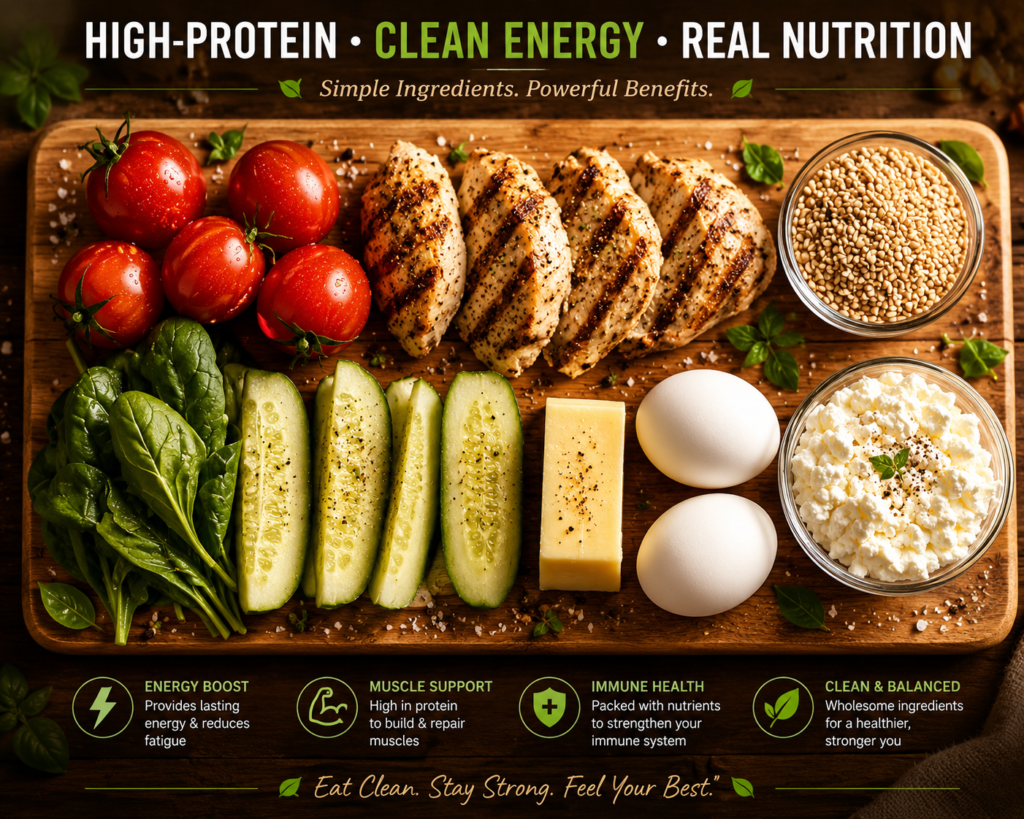
Building muscle while staying full requires strategic nutrition choices that deliver both satiety and results. Whether you’re training for performance or seeking sustainable energy, protein quality matters. This piece examines animal-based proteins such as lean meats, poultry, and dairy, alongside plant-based options including legumes, nuts, and grains. You’ll also find practical meal planning tips to integrate these foods effectively.
Introduction to High-Protein Foods
_1.jpeg "Top 16 High-Protein Foods to Build Muscle and Stay Full")
High-protein foods deliver 20-40g protein per serving with satiety scores above 8/10 compared to carb-heavy meals. Experts recommend 1.6g per kg of body weight for those focused on muscle building, compared to the general 0.8g per kg recommendation for basic needs. This higher intake supports muscle growth and helps control hunger throughout the day.
Protein intake in the range of 1.6-2.2g per kg has been shown to optimize hypertrophy according to position stands from nutrition organizations. The extra protein provides more amino acids for muscle repair after training sessions. People who follow these targets often see better results in strength gains and body composition changes.
Common choices include chicken breast at 31g per 100g, salmon at 25g per 100g, and Greek yogurt at 10g per 100g. Lentils provide 9g per 100g while eggs contain 13g per 100g. A single scoop of whey protein delivers about 25g, making these options practical for meeting daily targets.
Protein also creates a higher thermic effect, burning 20-30% of calories during digestion compared to 5-10% for carbs. This process supports metabolic rate and helps with weight management during calorie-controlled periods. Including these sources regularly makes it easier to stay on track with fitness goals and maintain lean muscle.
Animal-Based Proteins
Animal proteins provide complete amino acid profiles with all nine essential amino acids in optimal ratios for muscle protein synthesis. These sources rate higher on PDCAAS scores between 0.9 and 1.0 than most plant sources. This advantage supports faster nitrogen balance recovery after resistance training sessions.
Complete proteins from animal sources help maintain steady energy levels throughout the day. They also promote greater feelings of fullness compared to many plant alternatives. Athletes often choose these options when targeting specific body composition goals.
Research suggests animal proteins digest more efficiently than incomplete sources. This efficiency matters for those tracking daily macronutrient intake. Consistent consumption supports both muscle repair and overall satiety.
Animal proteins work well within structured meal plans designed for athletic performance. They provide the building blocks needed for sustained training progress. Many fitness enthusiasts include them daily to meet protein intake targets.
Lean Meats
_2.jpeg "Top 16 High-Protein Foods to Build Muscle and Stay Full")
Lean beef and pork tenderloin deliver 25-28g protein per 100g serving with under 5g fat per serving. Top sirloin contains 26g protein per 100g along with 5.5g fat. The 96 percent lean ground beef provides 21g protein per four ounce serving.
Pork tenderloin offers 27g protein per 100g portion. These cuts supply important micronutrients including 2.5mg iron per 100g of sirloin. Zinc content reaches 5.8mg per 100g in similar lean beef selections.
Batch cook two pounds weekly at 400 degrees for 18 minutes to prepare meals ahead. This approach saves time during busy training weeks. Prepped portions fit easily into daily nutrition tracking.
Research suggests consuming 30g lean beef after training supports muscle protein synthesis. This amount helps optimize recovery when paired with consistent resistance training.
Poultry and Fish
Chicken breast and white fish provide 25-31g protein per 100g with omega-3 benefits from fatty fish like salmon. Chicken breast contains 31g protein per 100g and 3.6g fat. Turkey breast delivers 30g protein per 100g portion.
Salmon provides 25g protein per 100g along with 1.8g EPA and DHA. Tuna offers 25g protein per 100g while shrimp contains 24g per 100g. Cod supplies 18g protein per 100g.
Limit tuna to two servings weekly per FDA guidelines. Air fry chicken at 375 degrees for 12 minutes. Poach fish at 180 degrees for 10 minutes to preserve nutrients.
Chicken breast contains 2.7g leucine per 100g. This amount meets the threshold needed for muscle protein synthesis. These options support both muscle growth and hunger control during dieting phases.
Dairy Products
_3.jpeg "Top 16 High-Protein Foods to Build Muscle and Stay Full")
Greek yogurt offers 10g protein per 100g while whey isolate provides 25g per 30g scoop with rapid absorption. Nonfat Greek yogurt supplies 17g protein per 170g serving at morning meals. Cottage cheese delivers 14g protein per 100g as a nighttime snack.
Whey isolate works well within 30 minutes after workouts. Casein provides 24g per scoop with slow release over six to eight hours. Eggs supply 6g protein per large egg while two egg whites offer 4g.
Lactose-free options exist for those sensitive to dairy. Research suggests consuming 40g casein before bed increases overnight muscle protein synthesis. This timing helps maximize recovery during sleep.
Dairy sources fit various meal timing strategies for different fitness goals. They support both muscle maintenance and appetite suppression when included regularly.
Plant-Based Proteins
Plant proteins require strategic combining to achieve complete amino acid profiles for optimal nitrogen balance. These sources typically score between 0.6 and 0.9 on PDCAAS scales, which sits below many animal proteins. Individuals pursuing muscle growth benefit from paying attention to leucine thresholds and pairing different plant foods together.
Complete amino acid intake supports proper protein synthesis during resistance training programs. Many athletes add quinoa alongside legumes to fill amino acid gaps. This approach helps maintain muscle repair processes throughout the day.
Experts recommend tracking total daily intake rather than relying on single food items. Consistent consumption patterns lead to better body composition outcomes over time. Plant protein sources work well within structured meal plans for those following vegetarian or vegan approaches.
Understanding these basics allows fitness enthusiasts to build effective strategies around plant foods. Proper planning ensures adequate essential amino acids reach target levels for hypertrophy goals. Many people successfully meet their protein needs through thoughtful combinations.
Legumes and Beans
_4.jpeg "Top 16 High-Protein Foods to Build Muscle and Stay Full")
Lentils and chickpeas deliver 8-9g protein per 100g cooked serving with 15g fiber for satiety. These foods provide substantial nutrition density while supporting hunger control throughout the day. Black beans offer similar benefits with comparable protein levels in each portion.
Edamame contains 11g protein per 100g along with 5g fiber content. Tofu provides 8g protein per 100g while tempeh reaches 19g in the same serving size. These options help individuals meet daily targets for muscle building and staying full between meals.
Research suggests legume consumption three times weekly can support improved body composition. Pressure cooking one pound of dry lentils in six cups of water takes approximately 15 minutes. This method creates convenient meal prep ingredients for weekly planning.
Legumes function as incomplete protein sources on their own. Combining them with quinoa or brown rice creates complete amino acid profiles. This pairing supports nitrogen balance requirements for those focused on lean muscle development.
Nuts and Seeds
Hemp seeds provide 31g protein per 100g while almonds offer 21g protein with healthy fats for calorie control. Pumpkin seeds contain 30g protein per 100g serving. Chia seeds add 17g protein alongside 10g fiber content in comparable portions.
Peanut butter delivers 25g protein per 100g serving size. Hemp seeds cost approximately 12 cents per gram of protein while almonds provide better value at 8 cents per gram. These differences matter when building cost-effective meal plans.
Adding two tablespoons of hemp seeds to Greek yogurt contributes 6g additional protein. One ounce of almonds serves as an effective afternoon snack with 6g protein content. Research suggests nut consumption connects to better weight management outcomes.
Nuts and seeds work as convenient options for on-the-go nutrition. They support overall protein intake goals while providing sustained energy. Many athletes incorporate these foods into pre-workout and post-workout routines.
Whole Grains and Soy
Quinoa supplies 14g complete protein per 100g cooked while soy products like tempeh reach 19g per 100g. Brown rice contains 7g protein per 100g as an incomplete source. Oats provide 13g protein per 100g serving for breakfast applications.
Soy milk offers 3.5g protein per cup. Soy isoflavones from tofu or tempeh at approximately 25mg daily connect to lower inflammation levels. This benefit supports recovery processes during intense training periods.
A quinoa bowl with black beans and tempeh delivers 28g total plant protein. Cooking one cup of dry quinoa in two cups of water requires 15 minutes of simmering time. This preparation creates versatile base ingredients for various meal combinations.
Whole grains complement legume proteins effectively. Soy products add variety while contributing complete amino acid profiles. These combinations help individuals following plant-based approaches meet muscle growth requirements.
Meal Planning Tips
Distribute 1.6-2.2g protein per kg body weight across 4-5 meals to maximize muscle protein synthesis rates. This approach supports steady amino acid availability throughout the day for ongoing muscle repair and growth. Spacing intake helps maintain nitrogen balance while keeping hunger under control.
Consider a daily schedule that places higher amounts at key times. Breakfast can deliver around 30g from sources like eggs, lunch targets 40g with chicken breast, and a post-workout meal supplies 30g from whey protein. Dinner with salmon or lean beef provides another 40g, while a pre-bed option supplies 30g from casein protein for overnight recovery.
Research suggests consuming protein every 3-4 hours aligns with recommendations for optimal muscle protein synthesis. This pattern supports athletic performance and body composition goals without overloading any single meal. Track your intake using MyFitnessPal to ensure you hit daily targets consistently.
A weekly prep schedule keeps options ready. On Sunday prepare 4 chicken breasts along with 2 lbs ground turkey and cook 2 cups quinoa. These staples form the base for multiple meals and reduce decision fatigue during busy weekdays.
Conclusion
Consistent intake of 1.6g protein per kg from varied sources supports muscle repair and satiety across training cycles.
Animal proteins such as chicken, salmon, and Greek yogurt deliver complete profiles with all essential amino acids. These options prove effective for muscle repair after intense sessions. Plant proteins like lentils, quinoa, and tempeh add fiber to enhance satiety and support steady digestion.
Each meal benefits from reaching the leucine threshold of 2.5-3g to trigger protein synthesis. This amount activates muscle growth pathways effectively. Distributing protein evenly throughout the day maintains nitrogen balance and promotes recovery.
Track your protein intake for 7 days using Cronometer app to identify patterns and adjust portions. This practice reveals gaps in your current diet plan. Combine this approach with resistance training 4x weekly to project 2 to 4 pounds of lean mass gains over 30 days.