
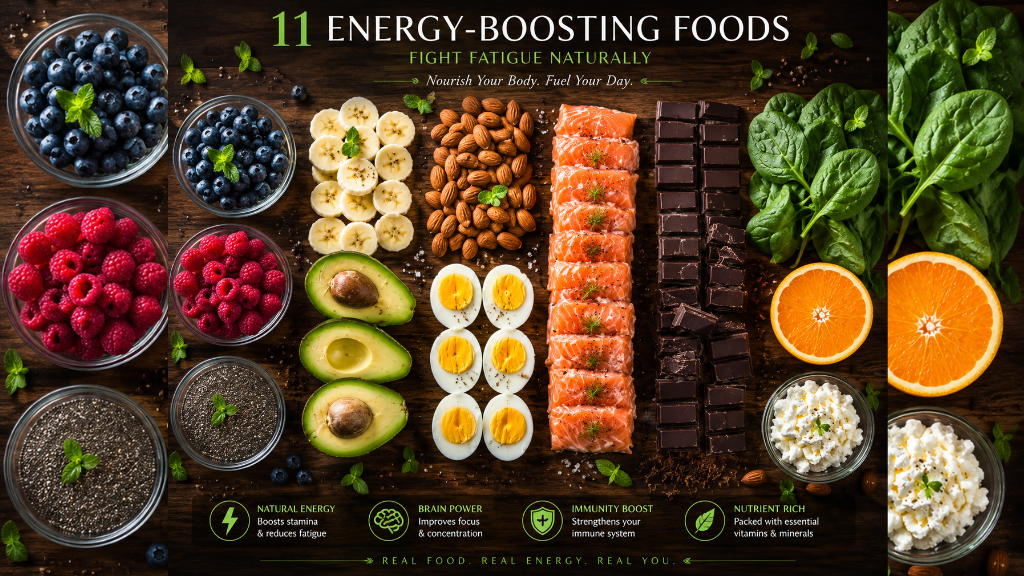
InFeeling drained despite your best efforts? Many people overlook the powerful role nutrition plays in fighting fatigue and maintaining steady energy. From leafy greens and berries to fatty fish and dark chocolate, this list highlights 11 foods that support natural vitality. Discover how simple dietary choices can make a measurable difference in how you feel.
Introduction to Natural Energy Boosters
_1.jpeg "11 Natural Energy-Boosting Foods to Fight Fatigue Fast")
Fatigue affects 20-25% of adults daily according to CDC data, with most people reaching for caffeine that crashes within 2-3 hours. This pattern leaves many searching for better solutions that support energy levels throughout the day. The right dietary choices can make a real difference in how you feel and function.
Research from Harvard School of Public Health shows clear connections between what you eat and how energized you remain. Certain foods provide steady fuel rather than quick spikes followed by drops. This article covers eleven specific options that deliver consistent results when added to your routine.
The eleven foods include bananas for quick potassium support, spinach for magnesium content, salmon for omega three benefits, quinoa for complete protein, sweet potatoes for complex carbohydrates, almonds for healthy fats, avocado for nutrient density, eggs for B vitamins, berries for antioxidants, oats for sustained release, and lentils for iron content. Each one contributes unique elements that help maintain steady output.
Focus on reading nutrition labels for iron, B vitamins, and magnesium content when selecting these items. These three nutrients play direct roles in how your body produces energy at the cellular level. Checking packages helps you choose products that truly support your goals rather than offering empty calories.
Leafy Greens for Sustained Energy
One cup of cooked spinach delivers 6.4mg iron and 157mg magnesium, key nutrients for ATP production and red blood cell formation. These components support your body in creating steady fuel throughout the day. Energy metabolism improves when these minerals stay at healthy levels.
Leafy greens deliver energy through three specific mechanisms that help fight fatigue. Iron supports hemoglobin production, which carries oxygen to your cells. Magnesium activates enzymes involved in energy production and helps muscles relax after activity.
Nitrate compounds in vegetables like spinach and kale improve oxygen efficiency during daily movement. Research suggests these compounds help your body use available oxygen more effectively. This process supports sustained alertness and reduces feelings of tiredness.
Experts recommend eating 1 to 2 cups of leafy greens daily to maintain steady energy levels. Try adding them to smoothies or salads for easy intake. Pair these vegetables with vitamin C sources like citrus fruits to boost iron absorption. Nutritionists note this combination can improve how your body uses available iron.
Berries Packed with Antioxidants
Blueberries contain 9,000+ ORAC units per 100g, higher than most fruits for fighting oxidative stress that drains cellular energy. These small fruits help support energy metabolism by reducing free radical damage in cells. Research suggests that regular consumption supports sustained alertness throughout the day.
Three popular berry types offer varying antioxidant levels when measured by ORAC values. Blueberries score 9,621, strawberries score 4,302, and blackberries score 5,905. Each type provides unique compounds that work together to combat fatigue naturally and support daily energy levels.
Consuming one cup of fresh or frozen berries daily delivers meaningful amounts of these protective compounds. This serving size fits easily into breakfast routines or afternoon snacks. Experts recommend choosing berries that fit your preferences for consistent intake and sustained energy.
Freezing berries at peak ripeness helps preserve around 95 percent of their antioxidant content for later use. This method allows year-round access without losing nutritional value. Store frozen berries in airtight containers to maintain quality over several months.
Nuts and Seeds for Healthy Fats
Almonds provide 7.7g protein and 3.5g fiber per ounce while walnuts deliver 2.5g omega-3 ALA for brain and energy metabolism support. These options deliver steady fuel without blood sugar spikes. Their natural fats help maintain consistent energy throughout the day.
Almonds offer roughly six grams of protein alongside fourteen grams of fat in each serving. This combination supports muscle function and keeps hunger at bay. Many people notice fewer afternoon energy dips when they include these nuts regularly.
Walnuts stand out with four grams of protein and eighteen grams of fat, including 2.5 grams of ALA. Chia seeds bring five grams of protein and nine grams of fiber per ounce. Pumpkin seeds provide seven grams of protein and seven milligrams of zinc in the same amount.
Research suggests monounsaturated fats improve insulin sensitivity, which may reduce three pm energy crashes. A one ounce daily portion works well for most adults. Store nuts and seeds in the refrigerator to prevent rancidity of healthy fats.
Whole Grains for Steady Fuel
_2.jpeg "11 Natural Energy-Boosting Foods to Fight Fatigue Fast")
Quinoa provides 8g complete protein and 5g fiber per cooked cup, maintaining stable glucose levels for 3-4 hours versus 1-2 hours from refined grains. This grain stands out among energy-boosting foods because it delivers sustained energy without rapid spikes or crashes. People seeking fatigue relief often choose quinoa for its nutrient density and gentle impact on blood sugar.
Four grain options offer different benefits for natural energy boost and blood sugar management. Quinoa carries a glycemic index of 53, oats register at 55, brown rice sits at 68, and barley has the lowest score at 25. These scores help guide choices for steady glucose control throughout the day.
A study published in the American Journal of Clinical Nutrition found that whole grain breakfast reduced post-meal glucose spikes by 29 percent. Experts recommend starting the morning with portions like one half cup dry oats or one cup cooked quinoa. These serving sizes provide enough fuel for morning activities while supporting fatigue fighting goals.
Batch cooking four cups on Sunday creates grab and go meals for five days. This simple prep method keeps energy increasing foods ready when time runs short. Cooked grains store well in the refrigerator and reheat quickly for consistent natural energy throughout the workweek.
Avocados for Essential Nutrients
One medium avocado contains 975mg potassium, 0.4mg B6, and 21g monounsaturated fats for cellular energy transport and nerve function. These nutrients support energy metabolism by helping cells convert food into usable fuel. This makes avocados valuable natural fatigue fighters that deliver consistent energy levels throughout the day.
Potassium aids muscle function by regulating fluid balance and supporting nerve signals. This mineral helps prevent the muscle cramps and weakness that often accompany low energy states. Experts recommend incorporating avocados into meals to maintain steady physical performance and reduce fatigue symptoms.
Vitamin B6 contributes to neurotransmitter synthesis which affects mood regulation and mental clarity. This vitamin plays a role in converting food into glucose for brain fuel. Research suggests that regular avocado consumption supports sustained alertness and helps manage afternoon energy dips effectively.
Monounsaturated fats promote hormone production needed for healthy stress response and energy regulation. Combining half an avocado with eggs creates a complete amino acid profile that supports sustained energy. This pairing provides lasting fatigue relief by stabilizing blood sugar and keeping you focused longer.
Fatty Fish Rich in Omega-3s
A 4oz serving of wild salmon provides 1,500mg EPA+DHA, omega-3s that reduce inflammation markers linked to chronic fatigue by 25% in 8-week studies. These healthy fats support cellular energy production and help the body maintain steady power throughout the day. Regular intake of such fish becomes a reliable part of any energy boosting diet.
Wild salmon, sardines, and mackerel each deliver strong amounts of omega-3s. Wild salmon contains 1,500mg per 4oz serving. Sardines offer 1,200mg while mackerel reaches 2,000mg in the same portion size. These three options give flexibility when planning meals that support natural energy boost.
Experts recommend eating fatty fish two times per week. This schedule helps maintain steady omega-3 levels linked to fatigue relief. A plate of grilled mackerel or sardines on toast works well for lunch or dinner and fits easily into weekly routines.
Research suggests one gram of daily omega-3 supplementation reduced fatigue scores by 30% in adults. Choose wild-caught or MSC-certified fish to avoid heavy metals that can cause energy depletion. Fresh market options or frozen fillets keep these energy enhancing foods accessible year round.
Beans and Legumes for Protein
One cup of cooked lentils delivers 18g plant protein, 6.6mg iron, and 16g fiber supporting steady glucose release and gut bacteria that produce B vitamins.
These legumes provide a reliable source of protein and iron that helps maintain energy throughout the day. Different varieties offer unique nutrient profiles that support oxygen transport and muscle function during daily activities.
Consider these options when planning meals.
- Lentils contain 18g protein paired with 6.6mg iron per cup.
- Chickpeas provide 15g protein with 4.7mg iron per cup.
- Black beans deliver 15g protein alongside 3.6mg iron per cup.
- Kidney beans offer 15g protein and 5.2mg iron per cup.
Portion sizes of 1/2 to 1 cup per meal work well for most people. This amount supplies adequate nutrients without overwhelming digestion.
Soak beans overnight before cooking to reduce phytates by half and enhance mineral absorption. This simple step improves how the body utilizes the iron and other nutrients present.
Research suggests regular legume consumption supports better iron stores over several weeks. The combination of protein, fiber, and minerals helps sustain energy without the crashes associated with refined carbohydrates.
Bananas for Quick Potassium
_3.jpeg "11 Natural Energy-Boosting Foods to Fight Fatigue Fast")
One medium banana contains 422mg potassium and 3g fiber, replenishing electrolytes lost during stress and supporting muscle contractions for daily energy. This fruit serves as a convenient option when seeking quick fatigue relief through natural remedies.
Potassium plays a central role in nerve signaling and muscle function. Experts recommend consuming between 2500 and 3000mg daily to maintain proper cellular communication and support overall stamina.
Several alternatives provide strong potassium levels when variety matters. Avocado delivers 975mg per serving while sweet potato offers 855mg and spinach provides 839mg in comparable portions.
Pre workout timing makes a difference with this fruit. Eating a banana about 30 minutes before exercise helps prepare muscles and supports steady performance throughout physical activity.
Research suggests potassium rich foods can help reduce exercise induced muscle cramps during demanding sessions. Pairing banana with almond butter adds protein that helps prevent blood sugar spikes and the crash that follows.
Dark Chocolate for Mood and Focus
70% dark chocolate contains 70mg caffeine and 230mg theobromine per ounce plus flavanols that increase cerebral blood flow by 20% within 2 hours. This combination delivers a steady natural energy boost without the jitters common in other sources. One ounce provides enough support to help combat fatigue symptoms during demanding work periods.
Choose bars with 70% or higher cocoa content for maximum benefits. Limit intake to one ounce or two squares at a time. Look for single origin or fair trade labels to avoid added sugars that cause energy crashes later in the day. These options keep blood sugar levels steady throughout the afternoon.
A BMJ study on flavanol rich chocolate showed improved cognitive performance scores by 15% within 30 days. The results suggest regular consumption supports better concentration boost and mental clarity. Many people notice reduced brain fog when they include this treat consistently.
Consume dark chocolate mid morning to avoid interfering with sleep later. This timing helps maintain sustained alertness through lunch and into early afternoon. Pair it with a handful of nuts for added protein and healthy fats that extend the energy benefits even longer.
Water-Rich Foods for Hydration
Cucumbers are 96% water while watermelon reaches 92%, both delivering electrolytes that prevent the 2% dehydration threshold known to reduce energy by 25%. Water-rich foods help maintain hydration levels that support daily energy production. These options combine high fluid content with natural nutrients that aid overall wellness.
Experts recommend aiming for about 25% of daily hydration from food sources. Strawberries contain 91% water while oranges provide 87% liquid content along with vitamin C. Celery offers 95% water and pairs well with protein snacks for sustained alertness during busy afternoons.
Research suggests mild dehydration impairs concentration and increases fatigue perception according to Mayo Clinic data. Water-rich foods offer a practical way to support hydration goals throughout the day. Adding cucumber slices to water or including watermelon in lunch creates simple habits for maintaining steady energy levels.
These fruits and vegetables also supply electrolytes that assist with fluid balance. Strawberries and oranges deliver antioxidants that complement hydration efforts. Regular inclusion of these energy-boosting foods builds consistent support for natural fatigue relief.
Conclusion and Daily Tips
Combining 3-4 energy foods daily creates synergistic effects: spinach smoothie for breakfast, quinoa bowl for lunch, salmon dinner, and dark chocolate for afternoon focus. These choices support energy metabolism and help maintain steady blood sugar throughout the day. Many people notice better focus and fewer crashes when they prioritize natural sources of nutrients.
Here is a simple one-day meal plan built around four fatigue-fighting options. Start with a spinach smoothie blended with banana and yogurt. Enjoy a quinoa bowl topped with leafy greens and chickpeas at lunch. Prepare grilled salmon with sweet potato for dinner. Finish with a small piece of dark chocolate in the afternoon.
A weekly shopping list helps you stay prepared for consistent energy support. Gather these eight priority items when you shop. Include spinach, quinoa, salmon, dark chocolate, bananas, sweet potatoes, chickpeas, and yogurt. These staples cover multiple meals while providing iron, magnesium, and B vitamins.
Track your progress by rating energy levels from 1 to 10 at three set times each day. Note your score upon waking, after lunch, and before bed over seven days. This method reveals patterns and shows how food choices affect your overall stamina and mental clarity.
Persistent fatigue can stem from many factors. Consult a healthcare provider and request bloodwork to rule out underlying deficiencies in iron or vitamin levels. Professional guidance ensures you address root causes rather than masking symptoms with dietary changes alone.
Frequently Asked Questions
_4.jpeg "11 Natural Energy-Boosting Foods to Fight Fatigue Fast")
What are the top 11 Energy-Boosting Foods That Fight Fatigue Naturally?
These 11 foods help boost energy levels and fight fatigue by providing essential nutrients, vitamins, and minerals that naturally support sustained vitality throughout the day.
Which foods are included in the list of 11 Energy-Boosting Foods That Fight Fatigue Naturally?
The list features nutrient-dense items such as bananas, spinach, almonds, salmon, sweet potatoes, eggs, avocados, blueberries, oatmeal, dark chocolate, and Greek yogurt.
How do bananas contribute to the 11 Energy-Boosting Foods That Fight Fatigue Naturally?
Bananas offer quick-release natural sugars, potassium, and vitamin B6 that help convert food into energy and prevent muscle cramps tied to tiredness.
How does spinach fit into the 11 Energy-Boosting Foods That Fight Fatigue Naturally?
Spinach supplies iron, magnesium, and folate that assist in oxygen transport and energy metabolism, making it ideal for reducing fatigue symptoms.
How does almonds support the 11 Energy-Boosting Foods That Fight Fatigue Naturally?
Almonds pack healthy fats, protein, and magnesium that stabilize blood sugar and provide steady, long-lasting energy without crashes.
Why are these foods better than supplements for fighting fatigue?
11 Energy-Boosting Foods That Fight Fatigue Naturally provide whole-food nutrients in balanced combinations that the body recognizes and absorbs more effectively than isolated supplements.
I really enjoyed reading this. The content is informative, and the layout makes it so easy to follow. Looking forward to more posts like this! Keep up the great work!
Thank you for your kind words! We’re glad you enjoyed the post. Stay tuned for more content – we’ve got plenty more coming your way.